0%

Choosing China’s best Bentonite Cat Litter suppliers is not just a price comparison. Bulk buyers need a steady product, clear specifications, and dependable communication. A low quote can look attractive until inconsistent granules or delayed shipments disrupt inventory. Details matter.

This guide introduces practical ways to assess suppliers before placing a large order. Compare clumping performance, dust levels, granule size, moisture control, and packaging options. Ask for recent product samples and written specifications, then check whether the delivered material matches them. A sample is useful, but it cannot prove every future shipment will be identical. That deserves attention.

Reliable sourcing also depends on production capacity, quality checks, export experience, and realistic lead times. Buyers should clarify minimum order quantities, pallet or container loading, private-label requirements, and how concerns are handled after delivery. Requesting inspection records or test results can help, though documents should be reviewed rather than accepted at face value. No supplier is perfect.

The right choice depends on your market, storage conditions, and customer expectations. A fine, fast-clumping litter may suit one product line, while another may prioritize lower dust or cost control. This article offers a starting framework, not a guarantee of supplier performance. Compare carefully, record what you learn, and leave room to revise your assumptions. Bulk purchasing rewards preparation, but honest follow-up matters too.

China Best Bentonite Cat Litter Suppliers for Bulk Buyers

What Bentonite Cat Litter Is and How It Performs

Bentonite cat litter is made from absorbent clay, valued for taking up liquid and forming scoopable clumps. Sodium-rich bentonite generally swells more than calcium-rich material, but performance also depends on mineral composition, processing, and granule size. In a tray, fine particles may clump quickly but create more dust. Coarser grains may track less, yet sometimes leave wetter spots. The U.S. Geological Survey’s Mineral Commodity Summaries 2024 estimated U.S. bentonite mine production at 4.7 million metric tons in 2023 and lists pet-waste absorbents among its uses. That figure covers all bentonite markets, not cat litter alone.

For bulk buying, test samples under consistent conditions: equal litter depth, measured liquid, and a set wait before scooping. Check clump strength, breakage, dust, odor control, and residual moisture. Keep the test simple. Ask suppliers for particle-size distribution, moisture, and batch-consistency data, then repeat the test. “Low dust” needs a defined measurement method; it is not a universal performance grade. One caveat remains: a strong first clump does not guarantee clean tray performance after several days. Damp pallets can affect flow and clumping, so inspect sealed bags and warehouse conditions before ordering.

China Bentonite Cat Litter: Product Basics, Performance, and Bulk-Buyer Checks

Dimension What Buyers Should Know Practical Bulk-Buying Check
What bentonite cat litter is A granular absorbent litter made from bentonite clay. Sodium bentonite is commonly used in clumping litter because it swells when wet and can bind liquid into removable clumps. Ask the supplier to identify the clay type and provide a current product specification and batch certificate of analysis (COA).
Clumping performance When liquid contacts suitable sodium bentonite granules, the material absorbs moisture and forms a clump. Clump strength and breakup resistance depend on the clay, particle size, and processing. Evaluate a representative sample using the same liquid volume, standing time, and scooping method for each sample.
Absorption and swelling Absorption varies with mineral composition, granule size, and processing. Sodium bentonite generally swells more readily than calcium bentonite; performance should be assessed on the finished litter rather than inferred from the clay name alone. Request the supplier’s test method and measured results. Compare samples under consistent test conditions before placing a large order.
Particle size Commercial granulated cat litters are commonly supplied in size ranges around 1–4 mm, although specifications differ. Mesh and millimetre ranges are not interchangeable without a stated sieve standard. Specify the required size distribution and allowable fines, and request a sieve-analysis report for the production batch.
Dust and fines Dust can be generated during crushing, screening, bagging, transport, and handling. A low-dust claim is meaningful only when the measurement method and acceptance limit are defined. Agree on a dust-test method and limit in writing. Inspect samples after simulated handling or transport, not only directly from the production line.
Moisture and storage Moisture content can affect flow, storage stability, and clumping behaviour. The acceptable level depends on the product specification and test method. Set a contractual moisture limit, specify the test method, and require moisture-resistant packaging suitable for the shipping and storage conditions.
Granule shape and consistency Granules may be rounded or irregular depending on processing. Consistent size and screening help support predictable pouring, scooping, and use. Check samples from more than one production batch and confirm that appearance and particle-size results meet the agreed specification.
Odour control Unperfumed bentonite can help contain liquid within clumps, but odour control also depends on prompt waste removal, litter depth, ventilation, and product formulation. Confirm whether the product is unscented or contains added fragrance, and evaluate odour performance in a controlled trial rather than relying on marketing claims.
Packaging for bulk orders Common commercial formats include multi-kilogram retail bags and larger bulk or jumbo bags. Actual bag weights, liners, pallet configuration, and labelling are supplier-specific. Confirm net weight, bag material, moisture barrier, pallet dimensions, labelling language, and packaging tolerances before production.
Supplier qualification Reliable sourcing depends on consistent raw material, controlled processing, traceable batches, and documented quality checks—not location alone. Request a production sample, COA, test methods, batch-traceability details, quality-control process, and written procedures for handling non-conforming goods.
Import and shipping readiness Import requirements, product labelling, customs documentation, and permitted claims vary by destination market. Shipping conditions can also affect packaging and product condition. Confirm destination-market requirements with the relevant authorities or customs broker, and agree on export documents, Incoterms, inspection terms, and claim procedures.
Specification note: Performance ranges and product characteristics vary by deposit, processing, and test method. Treat figures and descriptions as general buying guidance; put measurable limits, sampling procedures, and acceptance criteria in the purchase specification.

How to Evaluate Bentonite Cat Litter Suppliers in China

When evaluating bentonite cat litter suppliers in China, look beyond a low quoted price. The 2024 China Pet Industry White Paper reports that urban dog-and-cat spending reached RMB 300.2 billion in 2024, up 7.5%. This signals a substantial pet market, but it does not prove litter demand or any supplier’s production capacity. Ask for the mine origin, monthly output, and batch-level quality records. Check moisture, granule-size distribution, dust, clumping strength, and absorption using stated test methods. Useful evidence includes recent test reports and traceable batch numbers.

Numbers can mislead.

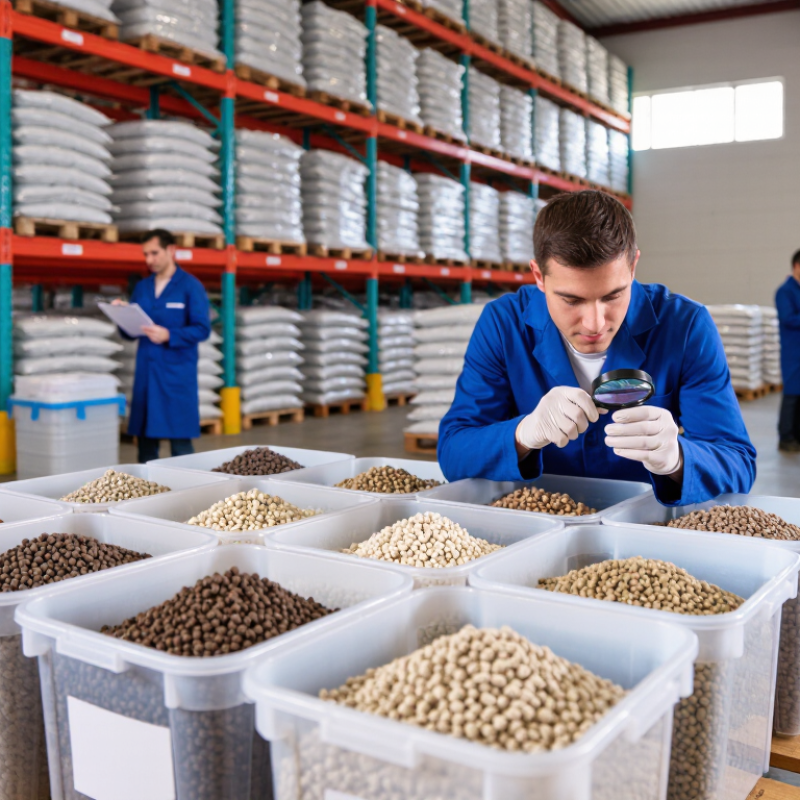
Request samples from several production batches, not just a hand-picked pouch. Test them under the same conditions your customers will use: pour depth, liquid volume, and time before scooping. A good result in one test may not reflect daily use. Visit the factory or arrange an independent inspection to compare production records with actual equipment and storage conditions. Confirm packaging specifications, lead times, and how the supplier handles quality complaints. Do not treat a certificate as proof of every shipment’s consistency. Keep a written acceptance standard, and review failed batches with the supplier before committing to repeat bulk orders.

Where China’s Bentonite Cat Litter Supply Chain Is Concentrated

China’s bentonite cat litter supply chain links mineral deposits with processing and export corridors. The USGS Mineral Commodity Summaries 2024 estimated China’s bentonite mine production at 4.8 million metric tons in 2023. That figure is national, not cat-litter-specific, so it cannot identify a single best sourcing province.

Raw bentonite deposits occur across several regions, including Inner Mongolia, Xinjiang, Guangxi, and Liaoning. Processing locations may differ from mining areas; buyers should confirm where each supplier extracts, dries, grinds, and granulates its material. That distinction matters. A factory near a port may ship efficiently but source clay from far inland. Ask for mine-origin details, recent test results, and a sample from the same production line used for bulk orders. Maps can mislead. Supplier directories and trade listings are useful starting points, but they are not geological surveys. Regional concentration can shift as freight costs, equipment capacity, and local supply change. For large purchases, compare delivered moisture, granule size, dust levels, and monthly output—not just the stated factory location.

Bulk Purchasing: Minimum Orders, Pricing, Packaging, and Shipping

For bulk buyers, a bentonite cat litter quote should separate product cost from freight, packaging, and handling. Ask suppliers to price the same grade at several order volumes, such as one pallet, one container, and repeat shipments. Confirm whether the minimum order applies per product type or per packaging format. A lower unit price may still mean more stock, slower turnover, and higher storage costs. Get the production lead time and payment terms in writing.

Product consistency matters. Specify granule size, moisture, dust level, clumping performance, and any fragrance requirements. The U.S. Geological Survey’s Mineral Commodity Summaries 2024 reports U.S. bentonite mine production of about 4.6 million metric tons in 2023; absorbents are among its established uses. That figure describes the wider mineral supply, not cat-litter availability, so it cannot predict a supplier’s capacity. Small point, but important. Compare packaging by net weight and pallet pattern: bags must remain stable during stacking, while woven or lined materials can affect moisture protection. Request a sample and inspect dust after pouring. It is not a perfect test. For shipping, compare the landed cost, including inland transport, port charges, and unloading, rather than relying on the factory price alone.

How to Verify Supplier Quality Before Placing an Order

Before ordering bulk bentonite cat litter, verify the mine source, processing site, and batch controls. Request recent test reports tied to the actual shipment, not a generic product sheet. Check moisture, particle-size distribution, clumping time, dust, and odor performance. Ask for the test methods and sample date. A clean-looking sample proves little.

The U.S. Geological Survey’s Mineral Commodity Summaries 2025 estimates U.S. bentonite production at about 4.7 million metric tons in 2024. That scale confirms an established mineral supply chain, but production volume does not guarantee litter consistency. Ask suppliers for three recent batch records and compare results. Request a sealed pre-shipment sample, then test it under your own conditions: pour it from a fixed height, measure dust, and check whether clumps hold after several minutes. Ask for evidence. Also confirm packaging strength, pallet loading, and how damaged bags are handled. Small gaps here can become costly across a container.

Tips: Put acceptance limits in the purchase order. Keep a retained sample from each approved batch. If the supplier resists independent testing, pause; I would not treat a certificate alone as assurance.

FAQS

Which regions in China have bentonite deposits?

Deposits occur in Inner Mongolia, Xinjiang, Guangxi, and Liaoning. Mining and processing may happen in different places. Maps can mislead.

Does China’s bentonite production figure show cat litter supply?

No. China produced an estimated 4.8 million metric tons of bentonite in 2023. That national figure does not show how much became cat litter.

What should I confirm about a supplier’s clay source?

Ask for the mine origin, processing site, and details on drying, grinding, and granulation. Request recent test results and a sample from the production line used for your order.

How should I compare bulk quotes?

Compare the same product at several order volumes, such as one pallet and one container. Separate product price, freight, packaging, and handling. A low unit price can still mean costly storage.

What product details should a purchase order specify?

Set limits for granule size, moisture, dust, and clumping performance. Include fragrance requirements if needed. Put acceptance limits in writing.

How can I check litter quality before shipment?

Request recent batch records and a sealed pre-shipment sample. Pour it from a fixed height, check dust, and see whether clumps hold after several minutes. Not enough by itself.

What should I check about packaging and shipping?

Confirm bag net weight, pallet stability, moisture protection, and damaged-bag procedures. Compare landed costs, including inland transport, port charges, and unloading.

Does a certificate guarantee consistent quality?

No. Compare records from three recent batches and keep a retained sample from each approved batch. I would still be cautious about relying on paperwork alone.

Conclusion

This article explains what Bentonite Cat Litter is and how its absorbency, clumping ability, dust level, and odor control can affect everyday use. It also outlines how bulk buyers can compare suppliers in China by reviewing production capacity, product consistency, communication, and experience with export orders. Rather than choosing based on price alone, buyers should consider whether a supplier can meet their specifications and provide clear information about materials and manufacturing.

The guide also describes how to research China’s supply-chain regions and plan an order, including minimum quantities, pricing factors, packaging options, and shipping arrangements. Before committing to a large purchase, buyers can request samples, inspect product specifications, and confirm quality-control procedures. These steps help reduce uncertainty, support informed supplier comparisons, and make bulk purchasing decisions more practical.

Ethan

Ethan

Ethan is a professional marketing specialist with a strong understanding of the company’s products and the needs of the people who use them. He regularly contributes expert articles to the company website, sharing clear, practical insights that help readers understand product features, compare......